Reliable Air Quality Monitoring, Anywhere
Clarity provides a complete, end-to-end air quality monitoring system trusted by governments, businesses, and communities in 85+ countries. Sensing-as-a-Service℠ combines resilient solar-powered air monitoring equipment, a full stack of cloud-based software, and expert air quality support into one seamless solution for air quality measurement.








Why global cities trust Clarity for air quality data
Global cities including Accra, Chicago, London, Los Angeles, Manila, Philadelphia, Perth, Washington D.C., and Yerevan trust Clarity for real-time, reliable air quality data. Clarity’s air monitoring systems are trusted in 85+ countries to accurately measure outdoor air pollution.
measurements
sensor deployments
quality data
quality monitoring
What's new at Clarity?

Air quality measurement trusted by:







%20copy.webp)


.png)


.png)

.webp)
Why Choose Sensing-as-a-Service℠
Clarity’s Sensing-as-a-Service℠ delivers air quality monitoring hardware, software, and support in one affordable package with minimal maintenance and no hidden costs. A modern, hassle-free way to monitor air quality, so you can focus on using the data, not managing your air quality measurement equipment.

Easily deployed air monitoring devices
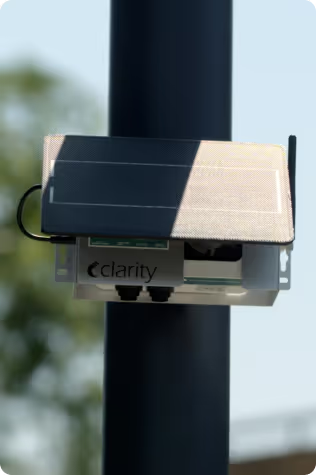
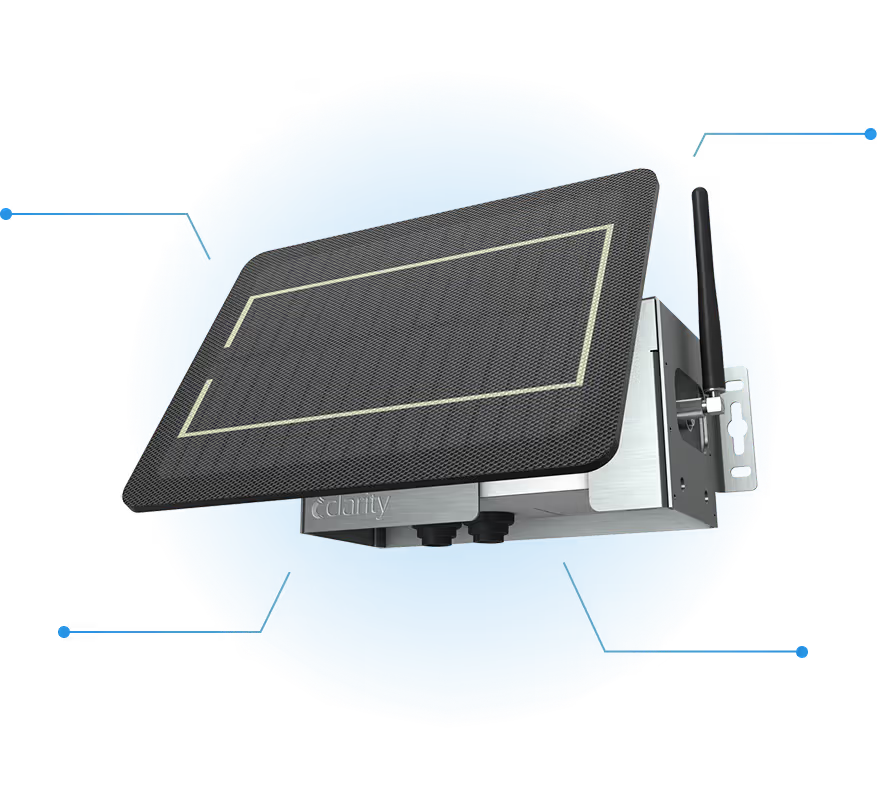
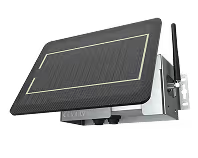
Solar-powered Clarity Node-S air quality sensor measures PM2.5 and NO2 and serves as a platform for additional modules that measure Black Carbon, Dust, Multi-Gas, Ozone, and Wind.
Explore our devices
Cloud data management & visualization
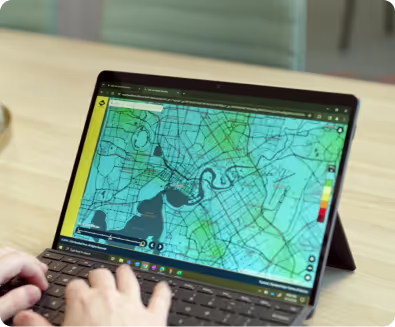
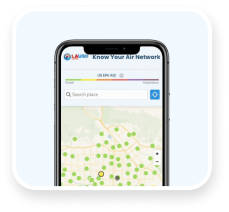
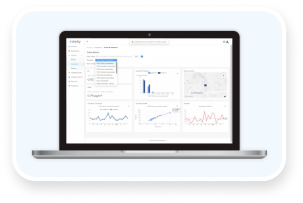
Air quality measurements and air sensor network status are easily accessible in real-time via Clarity’s user-friendly Dashboard, REST API, and OpenMap.
Learn more about Clarity Cloud
Expert air quality project support
An experienced Environmental Project Manager to help you define a project plan and guide you through Collocation and Calibration of your devices.
Clarity Node-S:
The globally-trusted, solar-powered air quality sensor
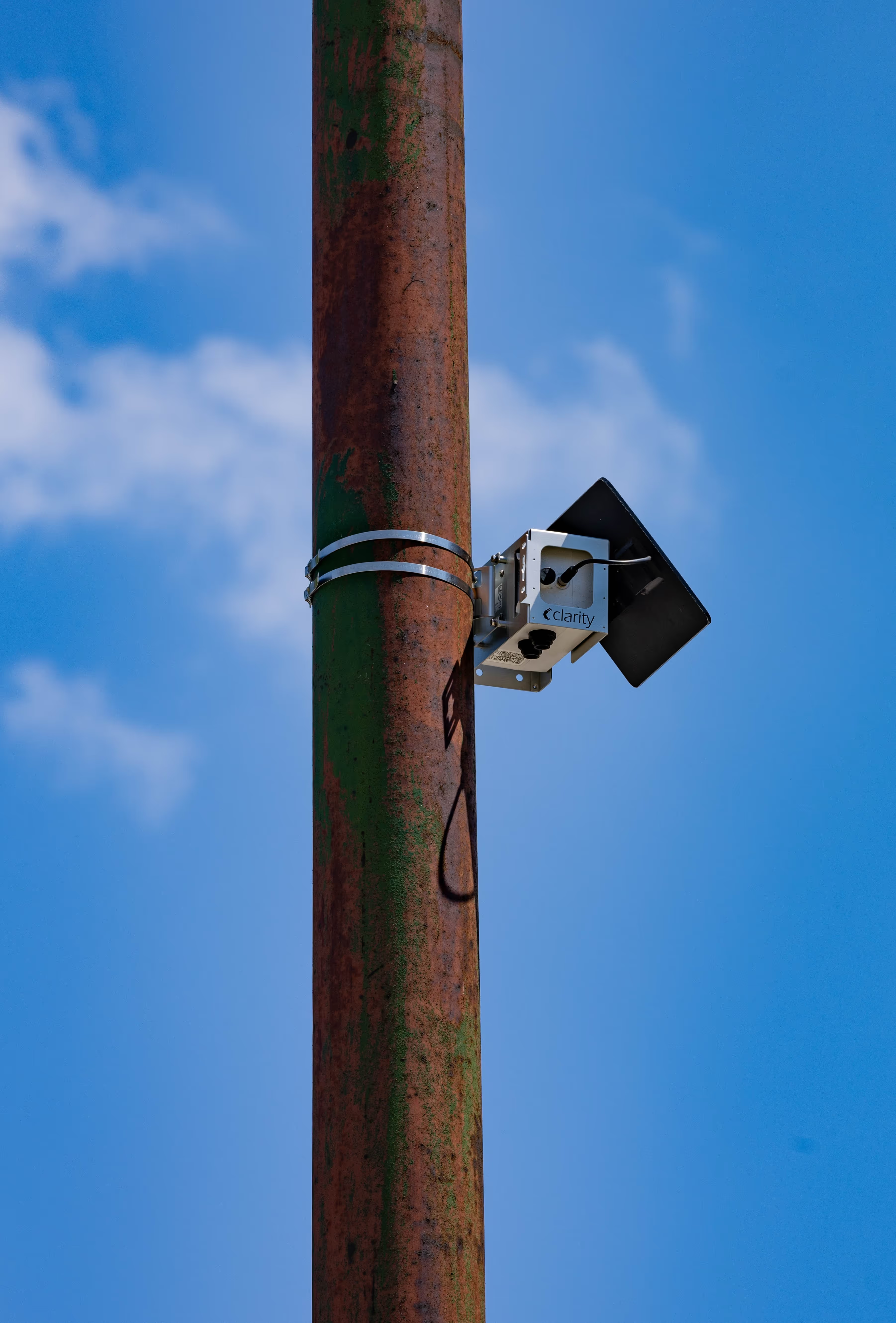
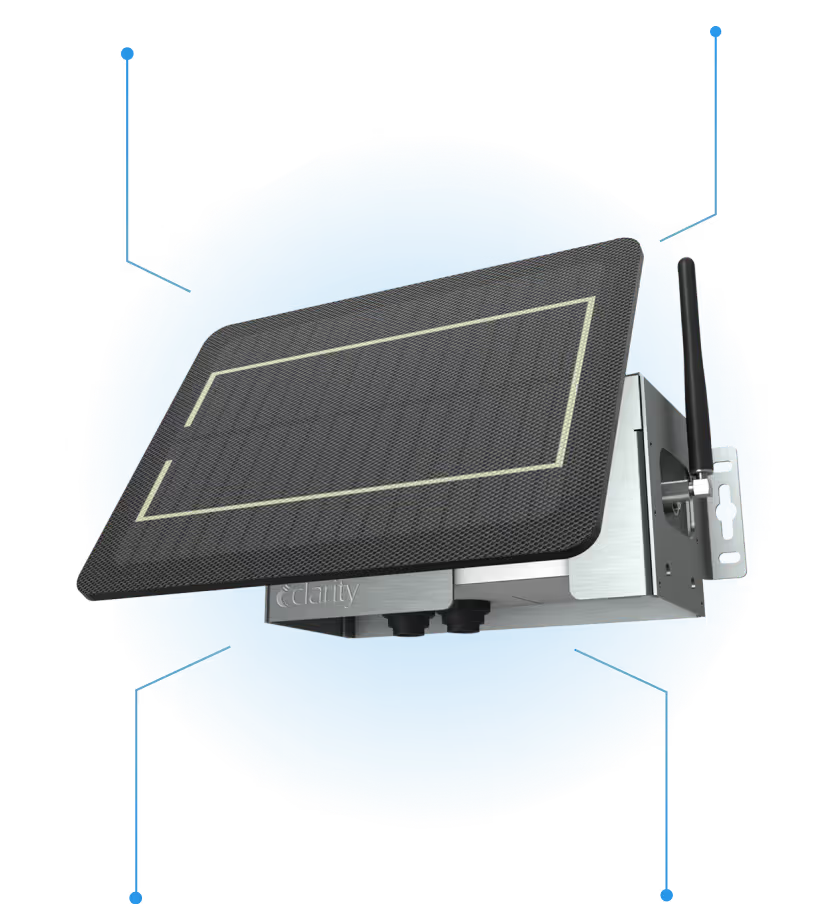
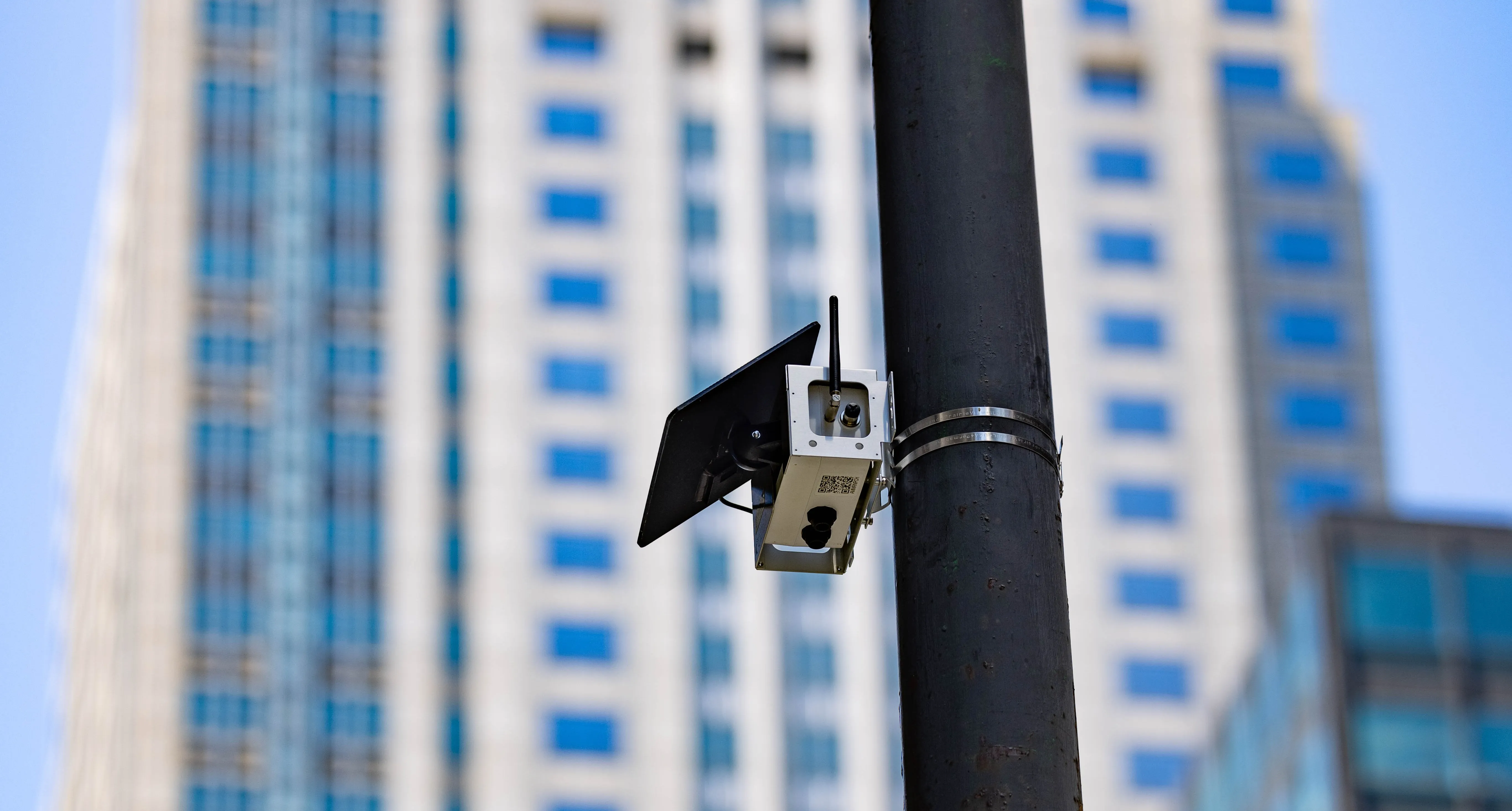
The Node-S is Clarity’s flagship outdoor monitor, delivering real-time, calibrated PM₂.₅ and NO₂ data. Solar-powered and cellular-connected, it operates continuously without external power or Wi-Fi. Built for reliable, scalable deployment in both cities and remote environments, the Node-S provides accurate air quality data anywhere.
Solar-powered performance
Runs autonomously with its integrated solar panel and battery - no grid power or cabling required.
Global cellular connectivity
A global SIM ensures reliable data transmission, even in low-infrastructure areas.
Simple, fast deployment
Compact, weatherproof, and lightweight for quick mounting on poles or walls.
Certified data accuracy
Rigorously field-tested and the only solar-powered air sensor with UK MCERTS certification for proven accuracy.
Modular air quality measurement
The Node-S is the foundation of Clarity’s modular air quality measurement system. This flexible, cost-effective approach means you invest only in the air pollution measurement devices you need, easily incorporating new Add-On Modules to scale as your needs evolve. Explore our Add-on Modules to build the right air quality monitoring system for your goals.

.svg)
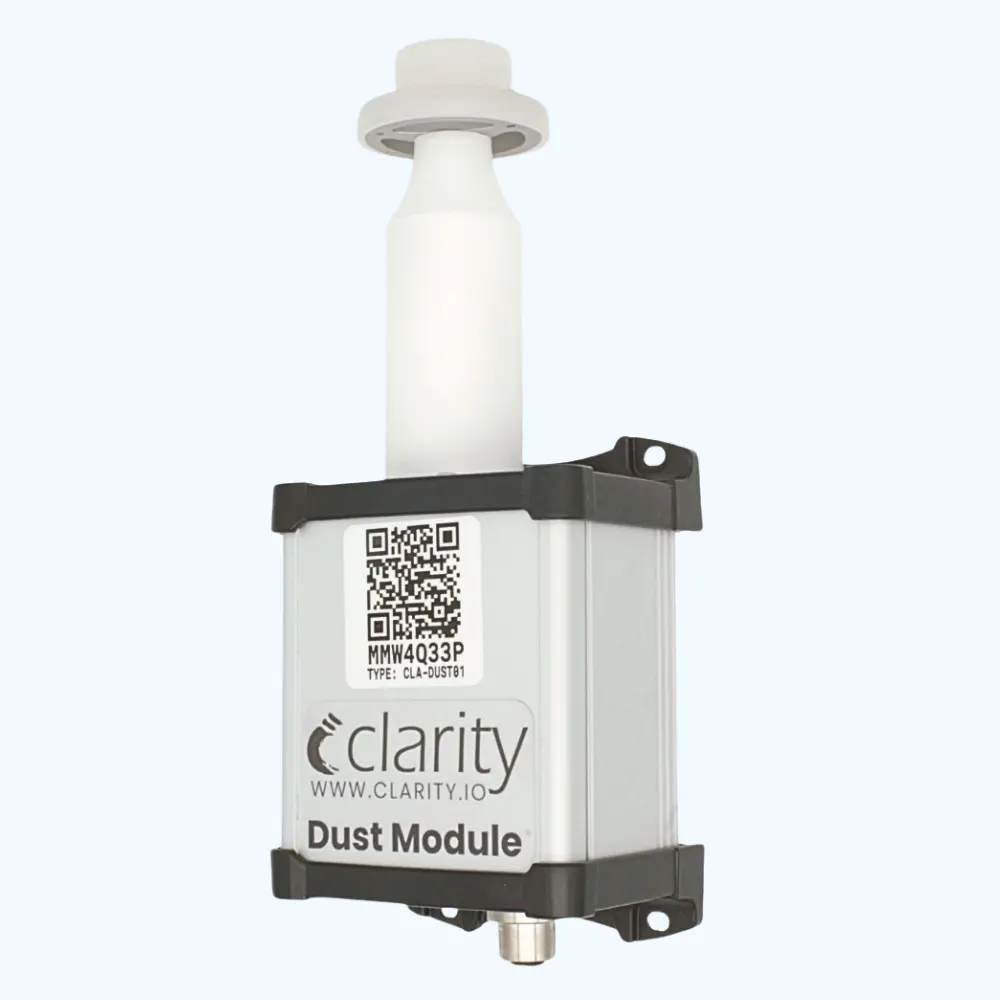
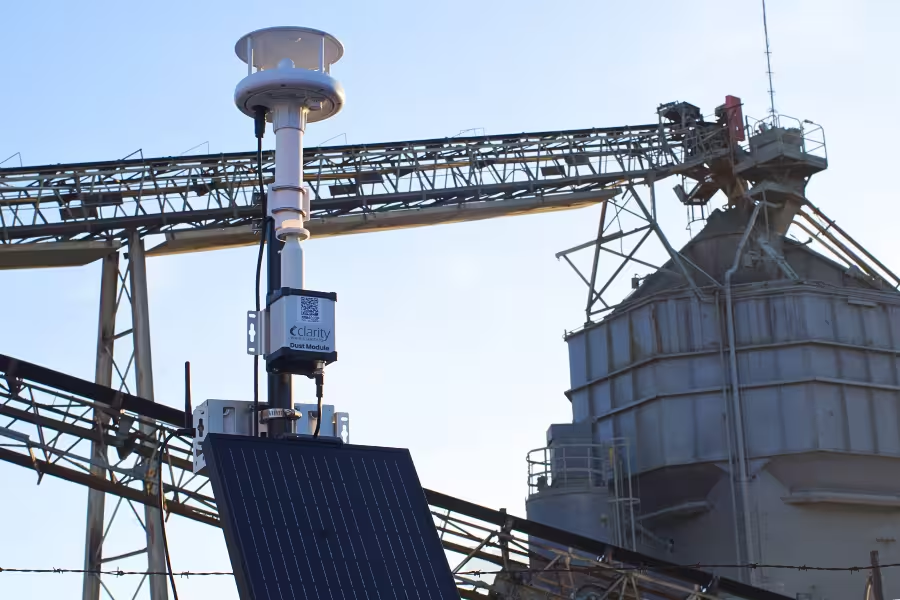
Dust (PM₁₀ ) Module
Near-reference PM₁₀ dust monitoring module designed for accurate, solar-capable outdoor and remote deployments.

Wind & Met Module
Plug-and-play wind module measuring speed and direction for improved air quality modeling and source attribution.

Black Carbon Module
Real-time black carbon monitoring module using microAeth® technology, designed for seamless integration into Clarity networks.
.webp)
FEM Ozone Module
EPA-approved module for accurate ozone measurement using UV absorption technology.

Multi-Gas Module
The Multi-Gas Module provides real-time measurement of CO, O₃, NO₂, NO, and NOx — five key pollutants that impact air quality and public health.

Clarity Cloud
As your Clarity devices sample the air, measurements are continuously uploaded to the Clarity Cloud via cellular networks. Our cloud architecture securely handles all aspects of your air quality data transmission, validation, storage, and processing.

Large-scale air quality monitoring networks powered by Clarity
See examples of how major cities around the world use the natively solar-powered Clarity Node-S air quality sensor and Clarity Add-On Modules for air pollution measurement across large geographic areas. For more examples, see our Customer Stories page.

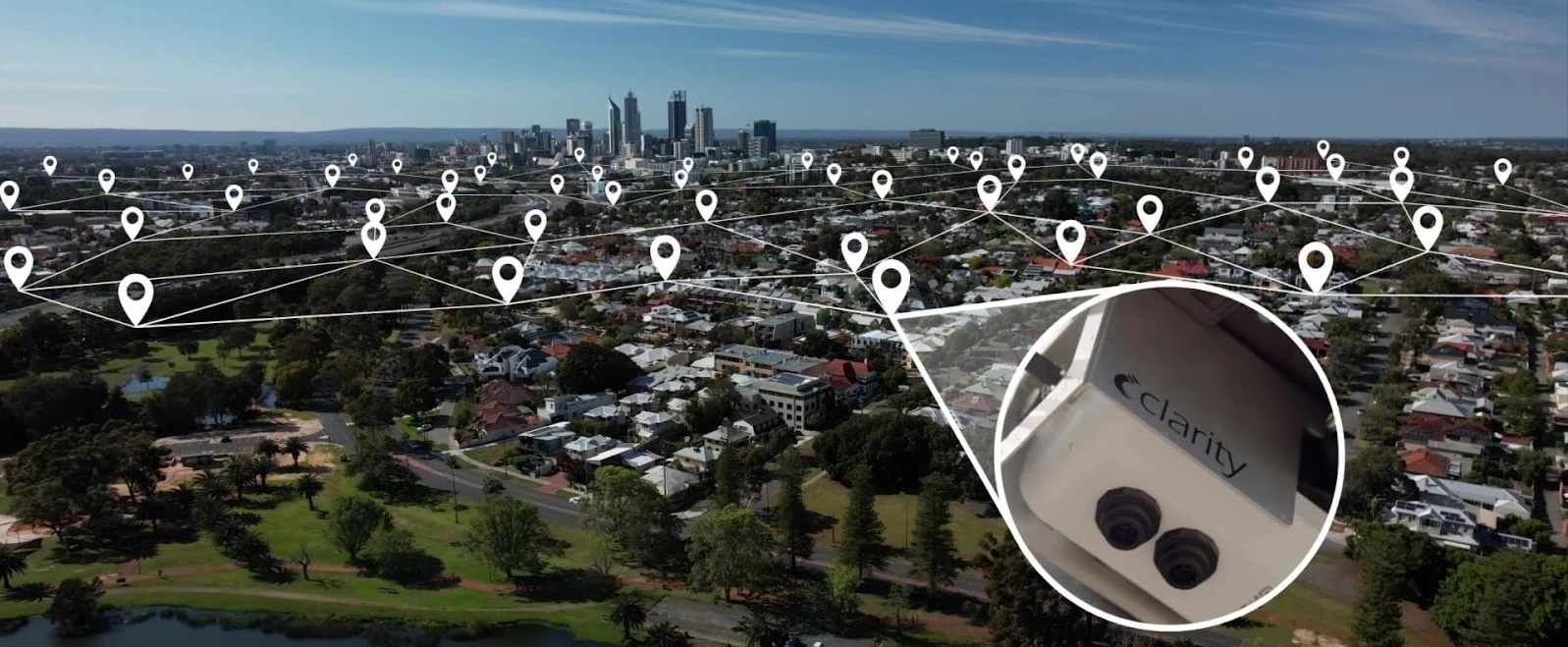
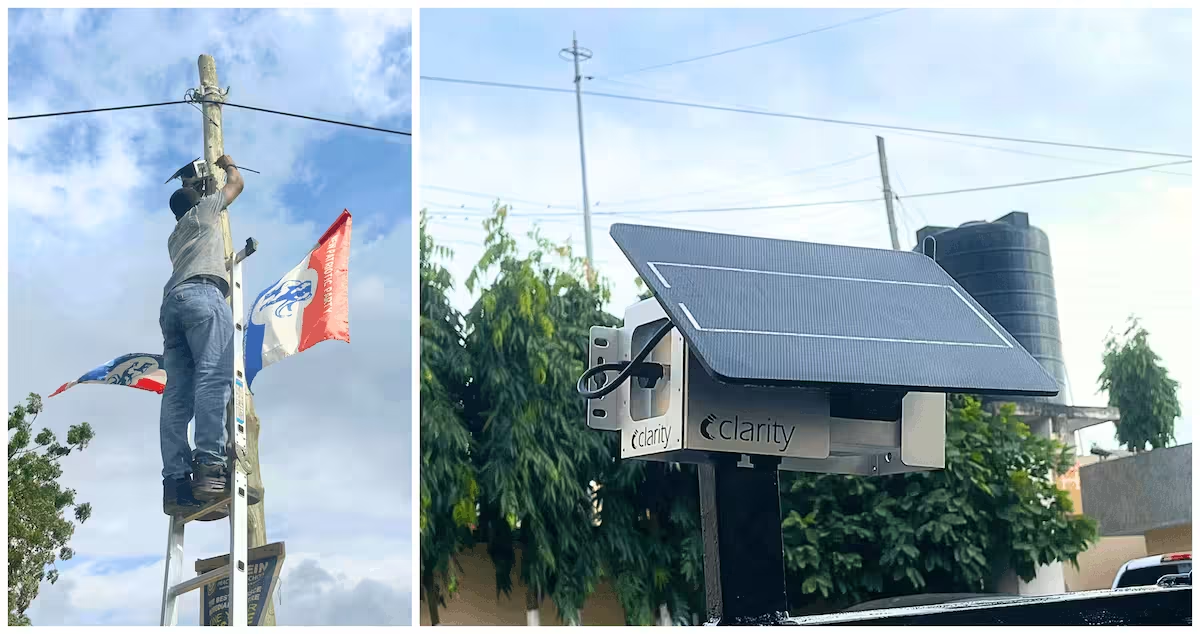


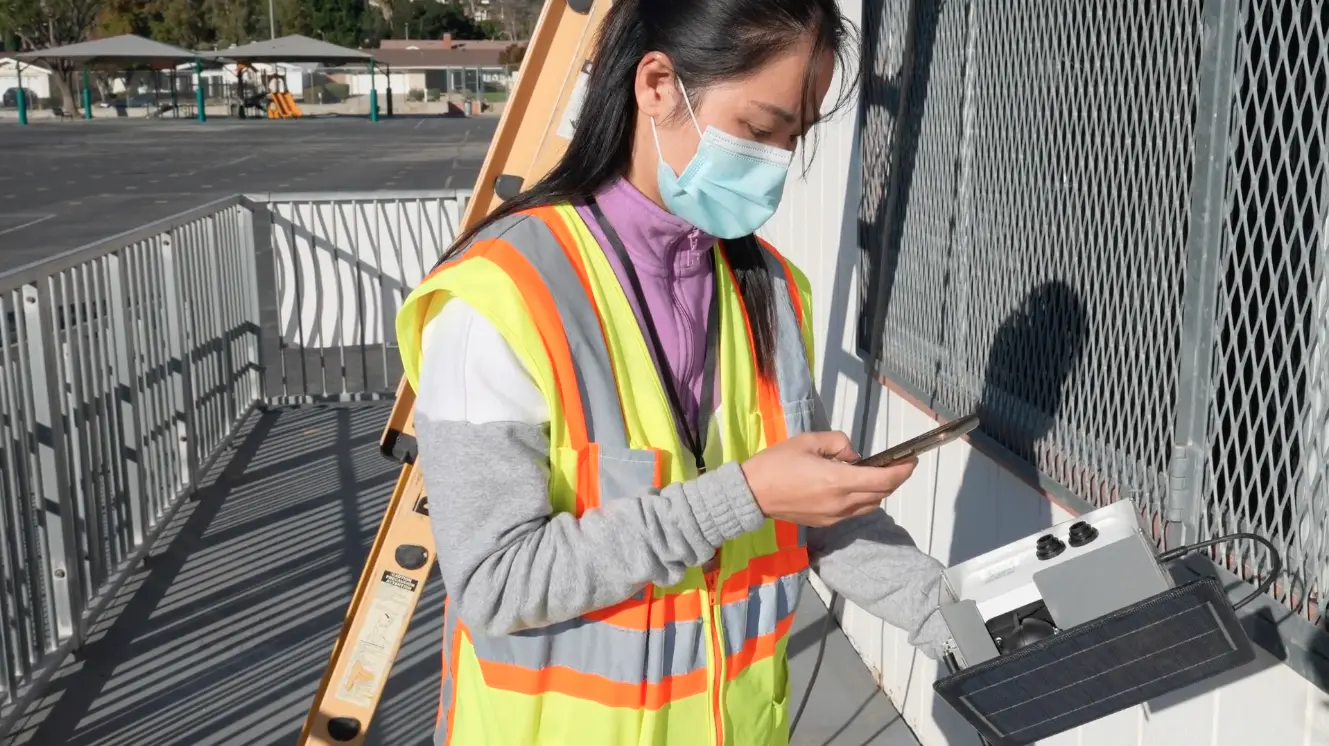


Air quality monitoring at the city scale, proven around the world
Use the interactive map below to explore a few of our largest, flagship air quality monitoring networks. To see all featured project visit our Customer Stories page.


Air quality monitoring for governments, businesses, and communities
Air quality needs vary, so Clarity’s platform is designed to serve cities, companies, and community organizations alike. Whether you’re a mayor, a sustainability lead, or a community advocate, Clarity delivers the real-time data you need.

For Governments
Agencies use Clarity to expand coverage beyond sparse regulatory stations, creating dense networks that inform policy and provide transparent public reporting.
Learn more
For Businesses
Industrial sites, construction projects, and private companies rely on Clarity to monitor emissions, identify issues, and support mitigation efforts.

For Communities
Non-profits and NGOs deploy Clarity sensors to empower residents with local air quality insights, and support community-led environmental action.
Clarity air monitoring success stories
Hear directly from partners who have built effective air quality monitoring programs with Clarity. Their testimonials highlight the impact of reliable, scalable air quality data.

"The Node-S is solar powered, has impressive battery life, and transmits data via cellular network. That means we could put these monitors anywhere that the sun shines and you can make a cell call. After the Marshall fire we installed a total of 22 monitors in the burn area. "


The information we get from the Clarity sensors and the air health monitoring has helped us shape a lot of what we're doing under our sustainability pillar. Having access to this data helps us in one of our key objectives for the city, which is to attract residents to the city in the future.”


"The Clarity Node-S is light, it has a small solar panel, and it's reliable. We can put them anywhere. All of those things combined mean it is super easy for communities to put them up by themselves."


“There's less maintenance with Clarity’s compact Node-S device — remote monitoring of device health means less cost to actually go to that particular site for maintenance. That time and cost-saving measure is critical for our business.”


"Today we have 50 Clarity sensors in Almaty that provide us with online data on the type of particles and pollution in different parts of the city. Thanks to these sensors, we can plan environmental measures in Almaty.”


"We needed high-density data to develop a model that was representative of a real situation on a very local scale – so multiple devices and multiple locations. The Clarity Node-S was ideal for this use case."

Your hub for air quality knowledge
View AllClarity shares ongoing research, articles, and technical guidance to advance air quality monitoring. Explore our Blog, Knowledge Base, and Resources Hub for expert insight, best practices, and detailed documentation on sensors, calibration, and community engagement. Below are some recent posts to keep you informed.



Stay informed on the latest in air quality monitoring
Sign up for our newsletter to be first in line to hear about any new product releases, industry news, and company updates.
Frequently Asked Questions
What is Clarity Movement Co., and what do they offer?
Clarity Movement Co. is an environmental technology company providing a complete Sensing-as-a-Service solution for ambient air quality monitoring. Their offering includes solar-powered Node-S air quality sensors, a cloud-based data platform, and expert support—empowering governments, businesses, schools, and communities to measure air pollution reliably and affordably.
How does Clarity’s Sensing-as-a-Service℠ air quality monitoring model work? How does it differ from traditional air quality monitoring?
Clarity’s Sensing-as-a-Service℠ bundles sensors, software, data connectivity, and support into a single subscription. You deploy Node-S air pollution sensors, and Clarity handles data transmission, calibration, and ongoing maintenance. There are no hidden costs—just fast, simple setup and real-time data via the Clarity Cloud.
How accurate and reliable are Clarity’s low-cost air quality sensors?
Clarity sensors are calibrated using remote and local methods to ensure decision-grade accuracy. Their patented Remote Calibration system aligns low-cost sensor data with regulatory standards, and ongoing updates (e.g. wildfire calibration models) keep data accurate even in extreme conditions. Third-party evaluations show strong performance compared to reference monitors.
Where are Clarity’s air quality monitoring solutions being used?
Clarity sensors are deployed in 85+ countries and 250+ cities, collecting billions of data points globally. Projects include Breathe London, Los Angeles Unified schools, and Bishkek, Kyrgyzstan. Clarity supports governments, NGOs, researchers, and industry.
What makes Clarity’s approach to air quality monitoring different from traditional methods?
Traditional monitors are expensive and sparse. Clarity offers dense sensor networks that are easy to deploy (solar-powered, cellular-enabled) and deliver hyperlocal data in real time. The fully integrated system removes complexity—hardware, software, and calibration come together in one seamless platform.
Who typically uses Clarity’s air quality monitoring systems, and how do they benefit?
Clarity serves cities and regulators, communities, schools, industries, and researchers. Customers—from the Mayor of London’s office to small rural counties—use Clarity’s data to inform policy, protect public health, manage compliance, and engage the public.
What are the most common air pollutants?
The most common ambient (or outdoor) air pollutants are Particulate Matter (PM 10 and PM2.5), Ozone (O3), Nitrogen Dioxide (NO2), Carbon Monoxide (CO), and Sulfur Dioxide (SO2).
Particulate Matter (PM10, PM2.5 and PM1) is a common & impactful air pollutant resulting primarily from combustion, including industrial activities, vehicles, & wildfires. Particulate matter differs greatly in its concentration and composition across the world but has a significant impact on public health in most countries. It is classified according to the size of its particles, the smaller categorization of which — PM2.5 — accounts for much of the pollutant’s detrimental effect on human and environmental health. Although the effects of PM are well studied, it remains in excess of benchmark levels for a large majority of the world’s population, prompting the need to take action in order to achieve cleaner air. Learn more about Particulate Matter here.
Ozone or O3, occurs both in the upper atmosphere and at the ground level. While it is a helpful substance in the upper atmosphere — forming a layer around the Earth to protect the planet’s surface from the sun’s ultraviolet rays — ozone acts as a pollutant at the ground level, causing negative effects on human and environmental health. Also known as ambient or tropospheric ozone, ground-level ozone is the primary component of the type of air pollution commonly referred to as smog. It is a colorless gas that is composed of three atoms of oxygen. Learn more about Ozone here.
Nitrogen dioxide (NO₂) is a subtype of a class of air pollutants known as nitrogen oxides (NOx). It primarily results from fuel combustion from sources such as motor vehicles and industrial activities. Nitrogen dioxide has significant impacts on human and environmental health, most notably when it comes to respiratory and cardiovascular health. Learn more about Nitrogen Dioxide here.
Carbon Monoxide (CO) is an odorless, colorless, tasteless gas formed by the incomplete combustion of fuel. It is very dangerous as it can displace the oxygen in the human body and lead to deadly poisoning. It is produced from fuel-burning appliances. Learn more about Carbon Monoxide here.
Sulfur Dioxide (SO2) is an air pollutant composed primarily of sulfur and oxygen. It results from combustion of coal, oil or diesel. It causes harmful effects on the lungs.
Can Clarity’s sensors detect wildfire smoke or specific air pollutants?
Yes — Clarity’s air quality sensors are specifically designed to detect fine particulate matter (PM2.5), which is a major component of wildfire smoke. In addition, Clarity offers modular pollutant measurement capabilities including nitrogen dioxide (NO₂), ozone (O₃), and black carbon, allowing for tailored monitoring of specific air pollution sources such as traffic, industry, or biomass burning.
Is Clarity’s air quality monitoring data publicly accessible or open-source?
Clarity provides the tools to make air quality data publicly accessible through its OpenMap air quality data platform, which enables organizations to share real-time data with communities, stakeholders, and the general public. While the data is not open-source by default, it can be transparently published and easily embedded into websites, dashboards, or public health initiatives.
Why is air quality monitoring important for communities and businesses?
Monitoring air quality empowers communities to protect public health and helps businesses reduce risk, demonstrate environmental responsibility, and ensure compliance with regulations. With real-time data, decision-makers can respond quickly to pollution events, track long-term trends, and implement evidence-based strategies that improve air quality and quality of life.
What causes air pollution?
There are two types of air pollution causes: natural sources and human-caused (AKA anthropogenic) sources.
Natural events can cause air pollution such as wind that carries dust and gases in locations with little green cover to absorb it, living beings release gases such as oxygen from plants during photosynthesis or methane from cattle but also volcanic eruptions, smoke, and ashes from wildfires.
Human-caused air pollution comes from various human activities including burning fossil fuels, agriculture, transportation, electricity, and industries. These activities result in emissions of carbon dioxide, nitrogen oxides, sulfur dioxide, volatile organic compounds, and particulate matter.
What are the health impacts of air pollution?
Air pollution affects nearly every area of the human body — from head to toe. It is a major environmental risk factor for a slew of diseases, from Alzheimer’s disease to lung cancer to osteoporosis, and can significantly lower lifespan and quality of life. Air pollution accounts for extensive damage to public health, while its exposure impacts everyone, its damage is not distributed equally. Children, elderly individuals, those with pre-existing conditions, and those living in low socioeconomic neighborhoods or environmental justice communities bear a disproportionate burden of its impacts — emphasizing the need to protect vulnerable populations by taking better care of our air quality.
In general, the wide-reaching damage caused by air pollution is thought to be a result of the systemic inflammation it causes. It can impact various body parts, including the eyes, brain, lungs, heart, stomach, liver, bones, and reproductive organ. Learn more about the health impact of air pollution here.